
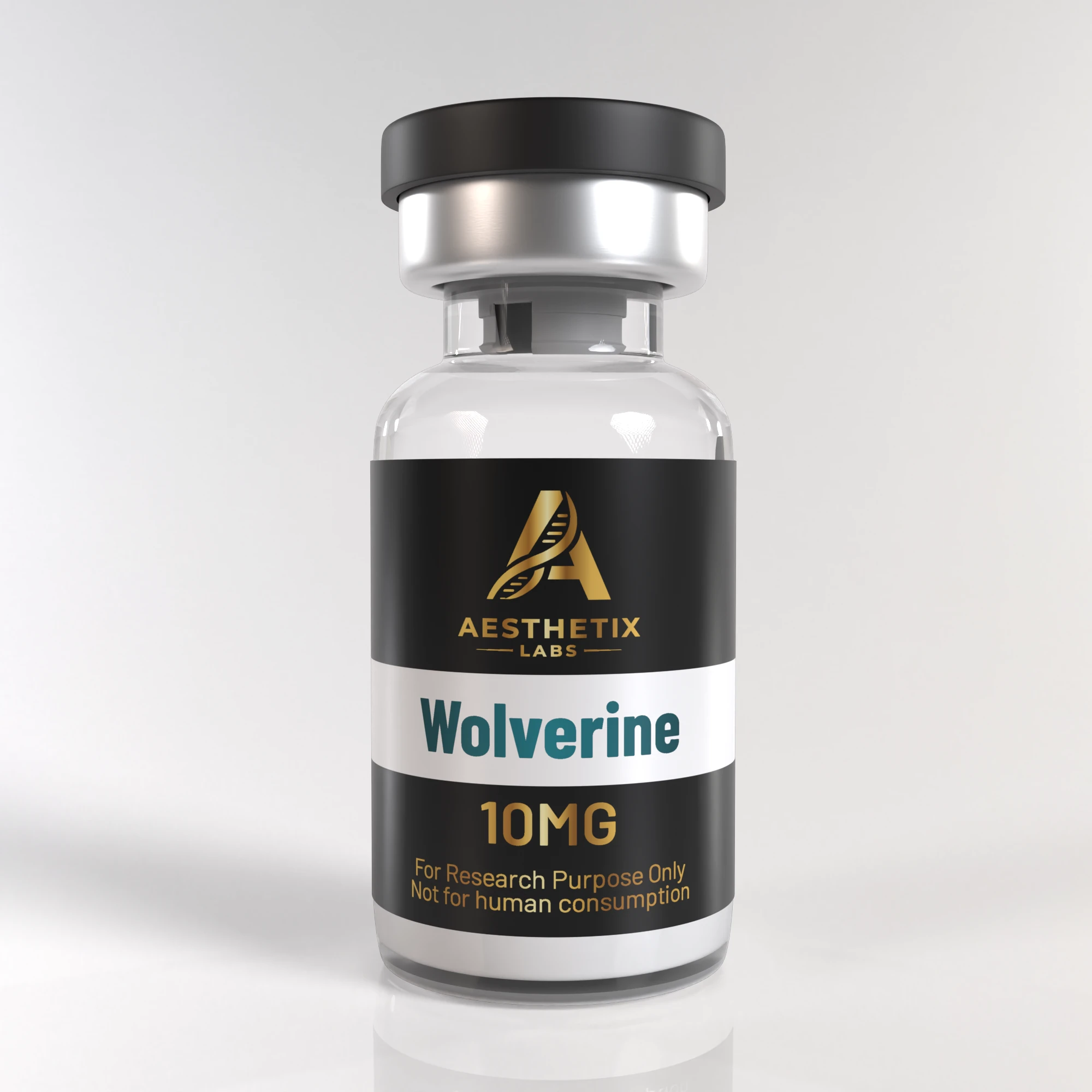

Wolverine Peptide (L-Arg-L-Tyr-L-Pro-L-Trp-L-Ala)
Wolverine is a synthetic peptide designed for investigative research applications in molecular biology and biochemical studies. This decapeptide is synthesized to mimic the structural and functional motifs observed in natural bioactive peptides, providing a controlled tool for studying protein interactions, cellular responses, and potential mechanistic pathways. Its composition and structural properties make it a valuable compound for academic and research-oriented investigations.
Research Context
Peptides like Wolverine have emerged as important research tools due to their ability to modulate biological processes at the molecular level. Their short amino acid sequences allow for targeted study in areas such as receptor binding, enzyme inhibition, and signal transduction pathways. Wolverine, in particular, has been explored in preclinical studies for its potential role in modulating neuroendocrine responses, inflammatory pathways, and cellular signaling cascades. As a research-grade compound, Wolverine is used by researchers to examine these interactions in vitro and in vivo models under controlled conditions.
Research Overview
Wolverine is composed of ten amino acids and exhibits structural similarities to natural peptides that influence neurotransmitter release, hormonal activity, and inflammatory mediator production. Its synthetic formulation allows for precise dosage adjustments and stability in research applications. While Wolverine is not intended for therapeutic or human/animal consumption, its synthetic nature enables researchers to test hypotheses regarding peptide-mediated effects on cellular and molecular processes. Applications may include studying peptide receptor interactions, assessing potential biological activity, and exploring mechanisms of action in experimental models.
Key Research Focus Areas
- Neuroendocrine Studies: Examination of peptide-mediated modulation of hormone release, receptor binding, and signal transduction pathways.
- Inflammatory and Immune Responses: Investigation of Wolverine’s potential influence on cytokine production, inflammatory pathways, and immune cell signaling.
- Cellular Signaling: Assessment of Wolverine’s effects on intracellular signaling cascades, including G-protein coupled receptor (GPCR) activation and downstream effector mechanisms.
- Receptor Affinity Studies: Characterization of Wolverine’s binding affinity to specific peptide receptors, including those involved in stress response, pain modulation, and neuroprotection.
- Preclinical Toxicity and Pharmacokinetics: Evaluation of Wolverine’s stability, metabolism, and safety profile in experimental models under controlled research conditions.
Important Safety and Compliance Statement
Wolverine is intended solely for research-use-only applications within accredited academic, government, or industrial research institutions. This peptide is not for human or animal consumption, therapeutic use, or any purpose outside of approved research protocols. Researchers must adhere to all applicable regulatory guidelines, local laws, and institutional policies regarding the handling, storage, and disposal of research materials. Proper experimental design, documentation, and oversight are essential to ensure responsible use and compliance with ethical standards.
For research use only. Not for human or animal consumption.
| Size | 10MG |
|---|



Reviews
There are no reviews yet.