
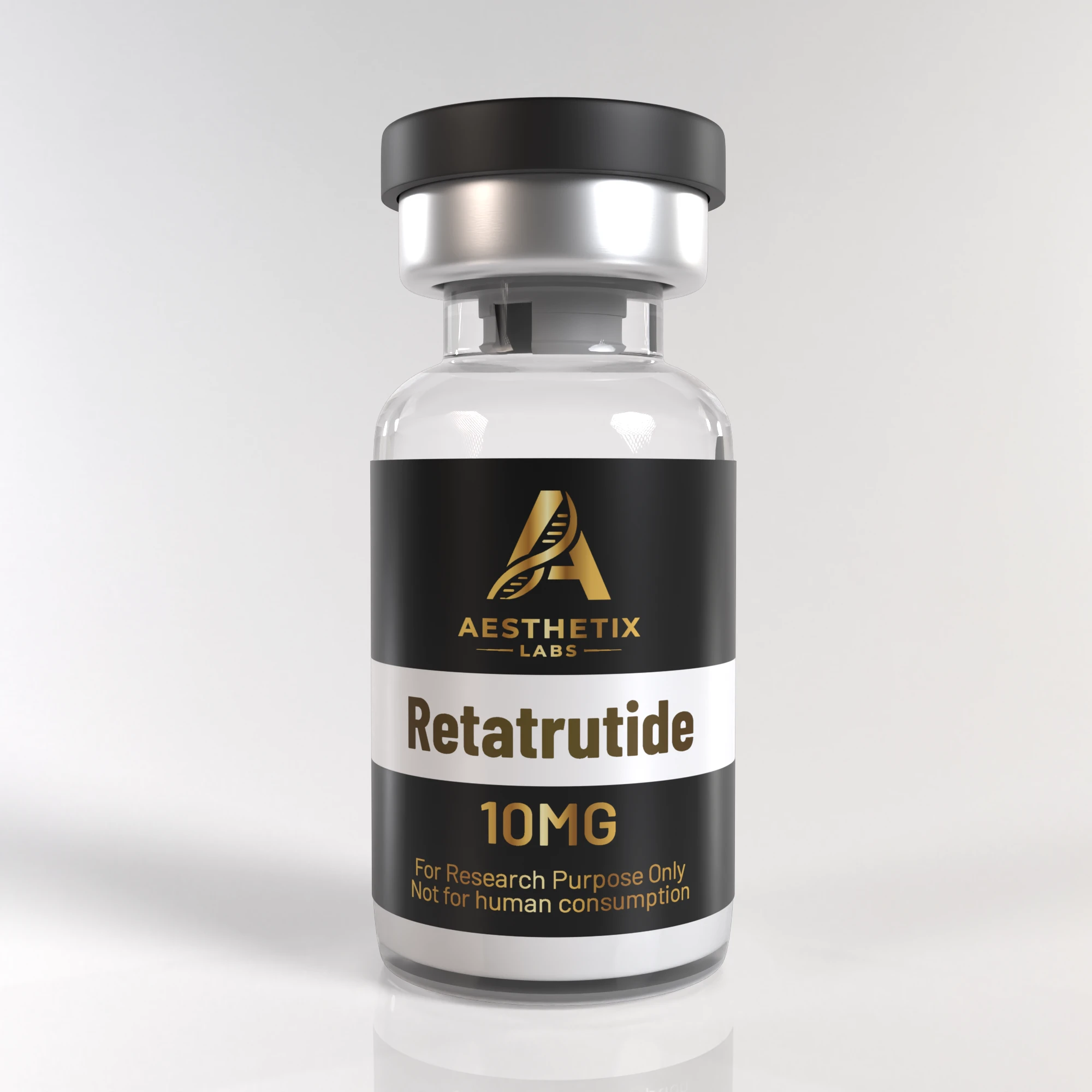

Retatrutide
Retatrutide is a novel, multi-targeting peptide being developed for research applications in metabolic and endocrine studies. As an investigational compound, retatrutide holds potential for exploring mechanisms of action related to glucose and lipid metabolism, as well as potential effects on gastrointestinal and energy regulation pathways.
Research Context
Retatrutide belongs to a class of compounds known as GLP-1/GLP-2/GLP-3 receptor agonists, which combine multiple glucagon-like peptide receptor ligands into a single molecule. Initial research has focused on its potential therapeutic effects in diabetes and obesity, though these applications remain under investigation. For academic or institutional research purposes, retatrutide may be utilized to study:
- Effects on glucose metabolism and insulin sensitivity
- Impact on gastrointestinal motility and satiety signals
- Potential modulation of appetite and energy expenditure
- Metabolic adaptations in experimental models of obesity
- Investigation of glucose tolerance and insulin secretion profiles
- Study of lipogenic and lipolytic pathways in experimental models
- Analysis of energy balance and body composition changes
- Examination of gastrointestinal transit and motility effects
- Investigation of satiety mechanisms and appetite regulation
- Study of potential enteric nervous system effects
- Analysis of hormone signaling pathways
- Investigation of pancreatic beta cell function
- Study of receptor-mediated metabolic adaptations
- Investigation of central nervous system effects on metabolism
- Study of hypothalamic regulation of energy homeostasis
- Analysis of potential brain-gut axis interactions
Research Overview
Retatrutide represents a significant advancement in peptide-based research tools by simultaneously activating multiple receptor pathways. The peptide has been shown to promote both glucose-dependent insulin secretion and sustained glucose homeostasis through its dual action on GLP-1 and GLP-2 receptors. Additionally, its third receptor target (GLP-3) may contribute to effects on gut hormone signaling and enteric nervous system regulation. Research utilizing this compound should be conducted within approved institutional review protocols and under proper biosafety measures.
Key Research Focus Areas
| Research Domain | Potential Applications |
|---|---|
| Metabolic Studies |
|
| Gastrointestinal Research |
|
| Endocrine Studies |
|
| Neuroendocrine Research |
|
Researchers utilizing retatrutide should be aware that this compound demonstrates significant potency across multiple physiological pathways, requiring careful experimental design and monitoring. Potential confounding factors include potential effects on cardiovascular function, renal clearance, and gastrointestinal integrity that may require consideration in study protocols.
Important Safety Note
While retatrutide shows promise in preclinical research models, its safety and efficacy in human or animal systems have not been established. Administration of this peptide requires proper handling procedures, including sterile preparation and appropriate disposal methods. Researchers should follow institutional guidelines for peptide storage, administration protocols, and emergency procedures. Always conduct studies within approved scientific environments with appropriate safety measures in place.
For research use only. Not for human or animal consumption.
| Size | 10MG, 20MG, 30MG, 50MG |
|---|



Reviews
There are no reviews yet.