
Research Use Only — Not for human consumption USA Compounded Peptides with GMP Standards High Purity Compounds for Advanced Research Applications Batch Consistency Verified through Strict Quality Control Fast USA Shipping with Secure and Reliable Delivery Research Use Only — Not for human consumption USA Compounded Peptides with GMP Standards High Purity Compounds for Advanced Research Applications Batch Consistency Verified through Strict Quality Control Fast USA Shipping with Secure and Reliable Delivery

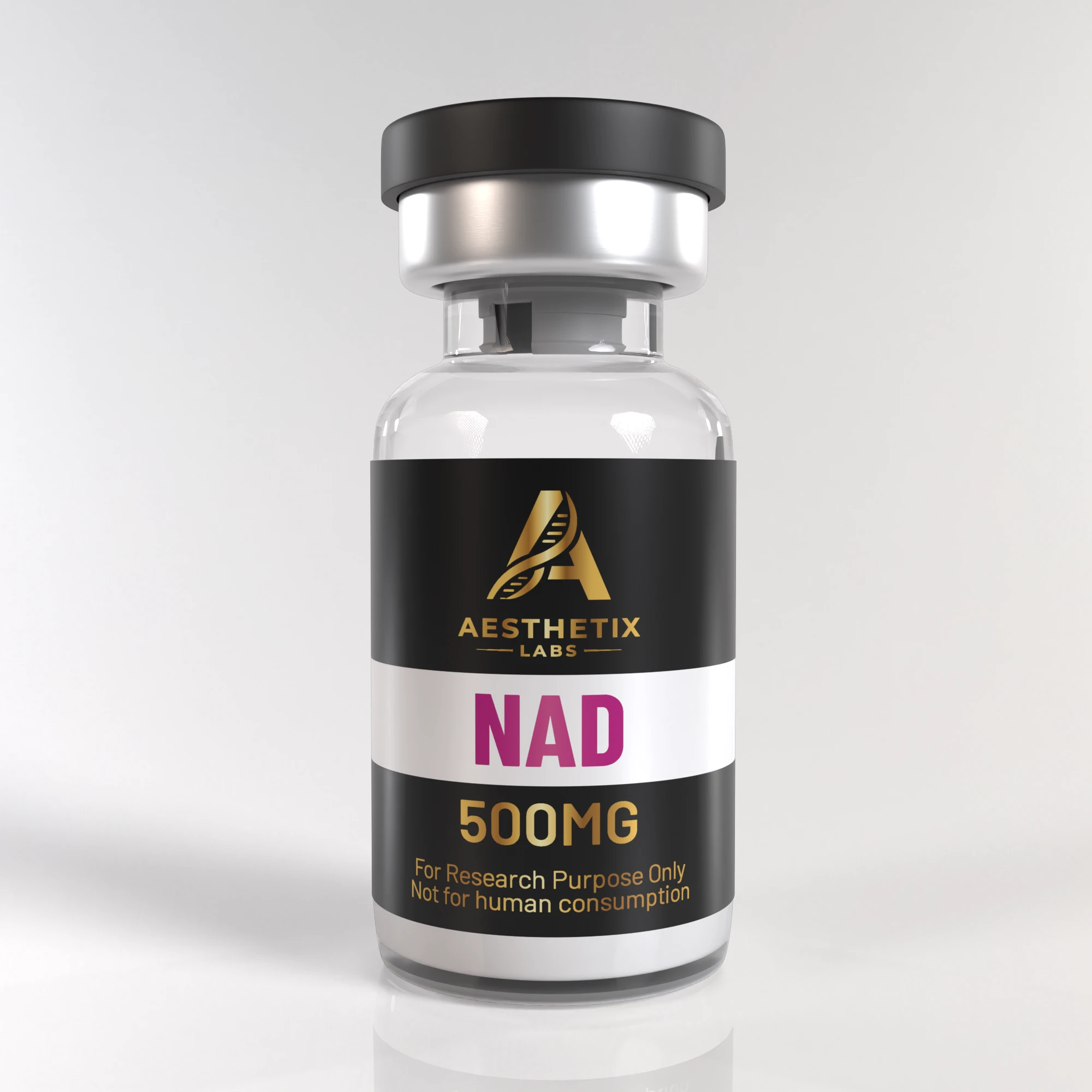
NAD 500MG

$75.00

NAD 500MG is a research-use-only peptide designed for laboratory applications. This compound offers potential biochemical exploration in controlled research settings. For research use only.

Satisfaction
Guaranteed

Secure
Payment

Third-party
Tested

Research Use Disclaimer

Research Use Only: All products offered by Aesthetix Peptides are intended strictly for laboratory research purposes. Products are not for human consumption and are not intended for diagnostic, therapeutic, or medical use. By purchasing from our website, customers confirm they are qualified researchers or laboratories and understand the intended research-use designation.

NAD 500MG

This product is a research-use-only formulation containing Nicotinamide Adenine Dinucleotide (NAD), presented at a concentration of 500 mg per dose. NAD is a naturally occurring coenzyme involved in essential metabolic processes and is an important research molecule for studies in biochemistry, cellular biology, and aging research.

Research Context

Nicotinamide Adenine Dinucleotide (NAD) is a vital coenzyme found in all living cells, playing a central role in redox reactions and energy metabolism. NAD levels decline with age, which is associated with various biological processes such as mitochondrial dysfunction, DNA repair deficits, and cellular senescence. Research exploring NAD and its precursors (such as Nicotinamide Riboside (NR) and Nicotinamide Mononucleotide (NMN)) has focused on potential applications in extending cellular health span, mitigating age-related decline, and studying metabolic pathways.

Research Overview

NAD is synthesized endogenously through two pathways: the de novo pathway (converting tryptophan to NAD+) and the salvage pathway (converting nicotinamide to NAD+). Extracellular NAD is primarily delivered via its precursors, which are metabolized intracellularly to restore NAD levels. Research investigations often employ purified NAD formulations to study its effects in vitro, in animal models, and in human-derived cellular systems under controlled laboratory conditions.

Key Research Focus Areas

  • Cellular Energy Metabolism
  • NAD serves as a critical coenzyme in the regulation of mitochondrial function, adenosine triphosphate (ATP) production, and metabolic reprogramming. Studies examine its role in maintaining cellular energy homeostasis under stress conditions.

  • DNA Repair and Cellular Senescence
  • Decreased NAD levels are linked to impaired DNA repair mechanisms, including the activity of enzymes such as PARP-1. Research investigates how NAD supplementation or analogs may influence longevity pathways and reduce age-associated cellular dysfunction.

  • Epigenetic Regulation and Gene Expression
  • NAD interacts with sirtuins (SIRT1-7), which are NAD-dependent deacetylases involved in regulating gene expression related to stress response, inflammation, and metabolic homeostasis. Research explores the effects of NAD on chromatin modification and transcriptional programs.

  • Metabolic Health and Aging
  • NAD plays a role in glucose metabolism, lipid regulation, and the insulin signaling pathway. Emerging studies examine NAD’s potential influence on metabolic syndrome, type 2 diabetes, and obesity in both preclinical and early clinical settings.

  • In vitro and In vivo Model Applications
  • Pure NAD is utilized in laboratory settings to study its effects on primary cell cultures, cell lines, and animal models under defined conditions. This includes investigating NAD’s effects on cellular senescence, autophagy, and oxidative stress responses.

This product is intended solely for use in academic, industrial, or government research contexts. It is not intended for therapeutic, diagnostic, or cosmetic purposes.

For research use only. Not for human or animal consumption.

Lorem ipsum dolor sit amet, consectetur adipiscing elit. Ut elit tellus, luctus nec ullamcorper mattis, pulvinar dapibus leo.

At Hollywood Peptides, we provide more than just industry-leading compounds; we provide the certainty and excellence required for groundbreaking results. We recognize that in the world of science, there is no room for error. That is why every formulation we offer is subjected to stringent validation and certification protocols.
 
Lab Report
Date Added :
05/21/2026

NAD 500MG

This product is a research-use-only formulation containing Nicotinamide Adenine Dinucleotide (NAD), presented at a concentration of 500 mg per dose. NAD is a naturally occurring coenzyme involved in essential metabolic processes and is an important research molecule for studies in biochemistry, cellular biology, and aging research.

Research Context

Nicotinamide Adenine Dinucleotide (NAD) is a vital coenzyme found in all living cells, playing a central role in redox reactions and energy metabolism. NAD levels decline with age, which is associated with various biological processes such as mitochondrial dysfunction, DNA repair deficits, and cellular senescence. Research exploring NAD and its precursors (such as Nicotinamide Riboside (NR) and Nicotinamide Mononucleotide (NMN)) has focused on potential applications in extending cellular health span, mitigating age-related decline, and studying metabolic pathways.

Research Overview

NAD is synthesized endogenously through two pathways: the de novo pathway (converting tryptophan to NAD+) and the salvage pathway (converting nicotinamide to NAD+). Extracellular NAD is primarily delivered via its precursors, which are metabolized intracellularly to restore NAD levels. Research investigations often employ purified NAD formulations to study its effects in vitro, in animal models, and in human-derived cellular systems under controlled laboratory conditions.

Key Research Focus Areas

  • Cellular Energy Metabolism
  • NAD serves as a critical coenzyme in the regulation of mitochondrial function, adenosine triphosphate (ATP) production, and metabolic reprogramming. Studies examine its role in maintaining cellular energy homeostasis under stress conditions.

  • DNA Repair and Cellular Senescence
  • Decreased NAD levels are linked to impaired DNA repair mechanisms, including the activity of enzymes such as PARP-1. Research investigates how NAD supplementation or analogs may influence longevity pathways and reduce age-associated cellular dysfunction.

  • Epigenetic Regulation and Gene Expression
  • NAD interacts with sirtuins (SIRT1-7), which are NAD-dependent deacetylases involved in regulating gene expression related to stress response, inflammation, and metabolic homeostasis. Research explores the effects of NAD on chromatin modification and transcriptional programs.

  • Metabolic Health and Aging
  • NAD plays a role in glucose metabolism, lipid regulation, and the insulin signaling pathway. Emerging studies examine NAD’s potential influence on metabolic syndrome, type 2 diabetes, and obesity in both preclinical and early clinical settings.

  • In vitro and In vivo Model Applications
  • Pure NAD is utilized in laboratory settings to study its effects on primary cell cultures, cell lines, and animal models under defined conditions. This includes investigating NAD’s effects on cellular senescence, autophagy, and oxidative stress responses.

This product is intended solely for use in academic, industrial, or government research contexts. It is not intended for therapeutic, diagnostic, or cosmetic purposes.

For research use only. Not for human or animal consumption.

Size

500MG

Reviews

There are no reviews yet.

Be the first to review “NAD 500MG”

Your email address will not be published. Required fields are marked *

Related Peptides