
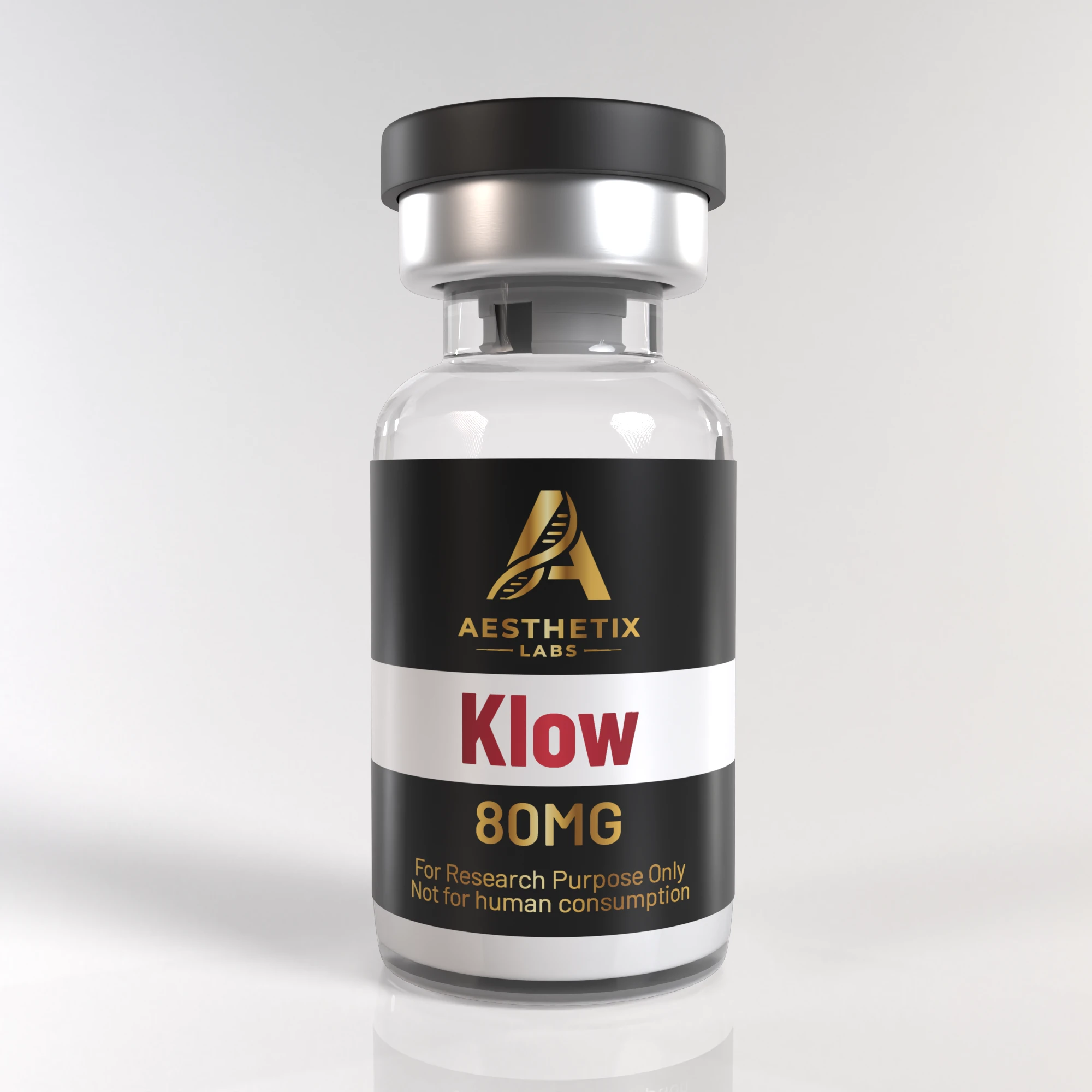

Klow (Kynurenic Acid Ligand)
Klow is a research-use-only peptide derived from the kynurenine pathway, a critical metabolic route in the human body. This compound has been explored in scientific research for its potential modulatory effects on neurochemical signaling pathways, particularly in the context of synaptic plasticity and glutamate receptor function. Due to its classification as a research chemical, Klow is provided exclusively for scientific, experimental, or academic purposes.
Research Context
The kynurenine pathway is a well-documented endogenous pathway that processes tryptophan into various bioactive metabolites, including kynurenic acid (KYNA). KYNA serves as a natural ligand for certain ionotropic glutamate receptors, including NMDA and α-amino-3-hydroxy-5-methyl-4-isoxazolepropionic acid (AMPA) receptors. Research has examined the effects of KYNA and its analogs on neuronal excitability, neuroprotection, and modulation of cognitive functions.
Klow is designed to replicate or modulate these effects, offering researchers a tool to investigate the biochemical and physiological consequences of kynurenine-derived signaling in vitro or in animal models.
Research Overview
Klow is synthesized to study its interactions with glutamate receptors, particularly in contexts where neurochemical modulation is a primary focus. Key studies have explored its potential in models of neurodegeneration, synaptic plasticity, and modulation of excitatory neurotransmission. While preliminary research suggests potential implications for understanding certain neurological mechanisms, further investigation is required to elucidate its full scope.
Due to its structural similarity to endogenous ligands, Klow may be used to probe how modulation of this pathway affects neuronal function, inflammation responses, and other metabolic processes. This compound should be utilized strictly within a research framework under appropriate institutional guidelines.
Key Research Focus Areas
- Neurochemical Signaling: Investigation of Klow’s effects on glutamate receptor activity, particularly NMDA and AMPA receptors, to understand its role in synaptic modulation and excitability.
- Neuroprotection and Neurodegeneration: Exploration of potential protective mechanisms in models of oxidative stress, excitotoxicity, or neurodegenerative conditions.
- Cognitive and Behavioral Studies: Examination of Klow’s impact on learning, memory, and behavior in preclinical settings, particularly in relation to kynurenine pathway metabolites.
- Metabolic Pathway Analysis: Assessment of how Klow influences tryptophan metabolism and the production of downstream bioactive compounds, such as KYNA.
- Pharmacological Profiling: Characterization of Klow’s binding affinity, efficacy, and selectivity in vitro or in animal models to determine its functional properties.
Safety and Compliance
Klow is provided as a research chemical and must be handled with care. Due to its structural and functional resemblance to endogenous signaling molecules, it carries potential risks when administered outside controlled experimental settings. Researchers should adhere to standard laboratory safety protocols, including proper storage, handling, and disposal procedures.
This product is not intended for human consumption, animal testing, or any therapeutic or diagnostic applications. Users must ensure compliance with all applicable regulations governing research chemicals, including export controls, classification as a restricted substance, and institutional review board approval when necessary. Misuse or unauthorized distribution is strictly prohibited.
For research use only. Not for human or animal consumption.
| Size | 80MG |
|---|


Reviews
There are no reviews yet.